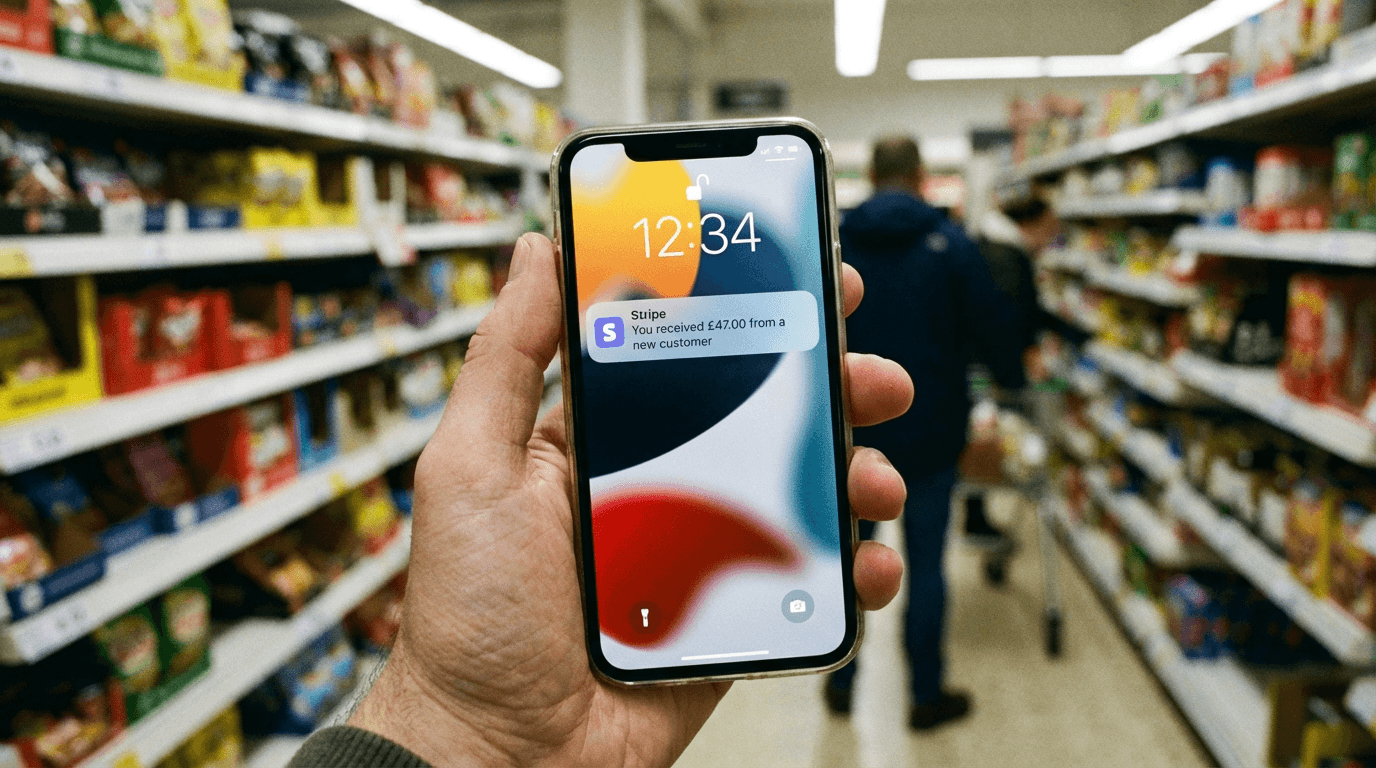
I Built a SaaS in 5 Days and Sold It for 15X ARR

On January 1st 2026, I started building HypeClip. Five days later, it was live. By March, I'd sold the micro SaaS for 15X annual recurring revenue on TrustMRR after three weeks of negotiation.
That's the headline. Here's the full story: how I built it, what it cost, how I grew it to over 100 paying creators, and exactly how I closed a deal at a multiple that most indie hackers would call absurd.
This was my first exit of 2026. It won't be the last.
The Idea
Content creators have an editing problem that's almost comically tedious. You record a two-hour livestream or a long podcast, and then you spend another two hours scrubbing through it, hunting for the 30-second moments that might perform on TikTok or YouTube Shorts.
Most creators I know spend 10+ hours a week on this. Some hire editors at £2,400 a month. The ones who can't afford editors just don't clip at all, which means their best content stays buried inside hour-long VODs that nobody watches.
The idea was simple: upload a long video, let AI find the viral moments, get back platform-ready clips in minutes. Not a full editing suite. Not a social media scheduler. Just one thing, done exceptionally well.
I'd written before about picking ideas with a built-in audience. Creators were the audience. Clipping was the pain. AI was the solution.
The validation stack was tight from day one, which is exactly what I look for in a product worth building.
Why was this a perfect flip candidate? Clear problem, obvious audience, fast to validate, and a market buzzing with creator economy money. I knew before writing a line of code that this would either work fast or fail fast.
5 Days of Vibe Coding
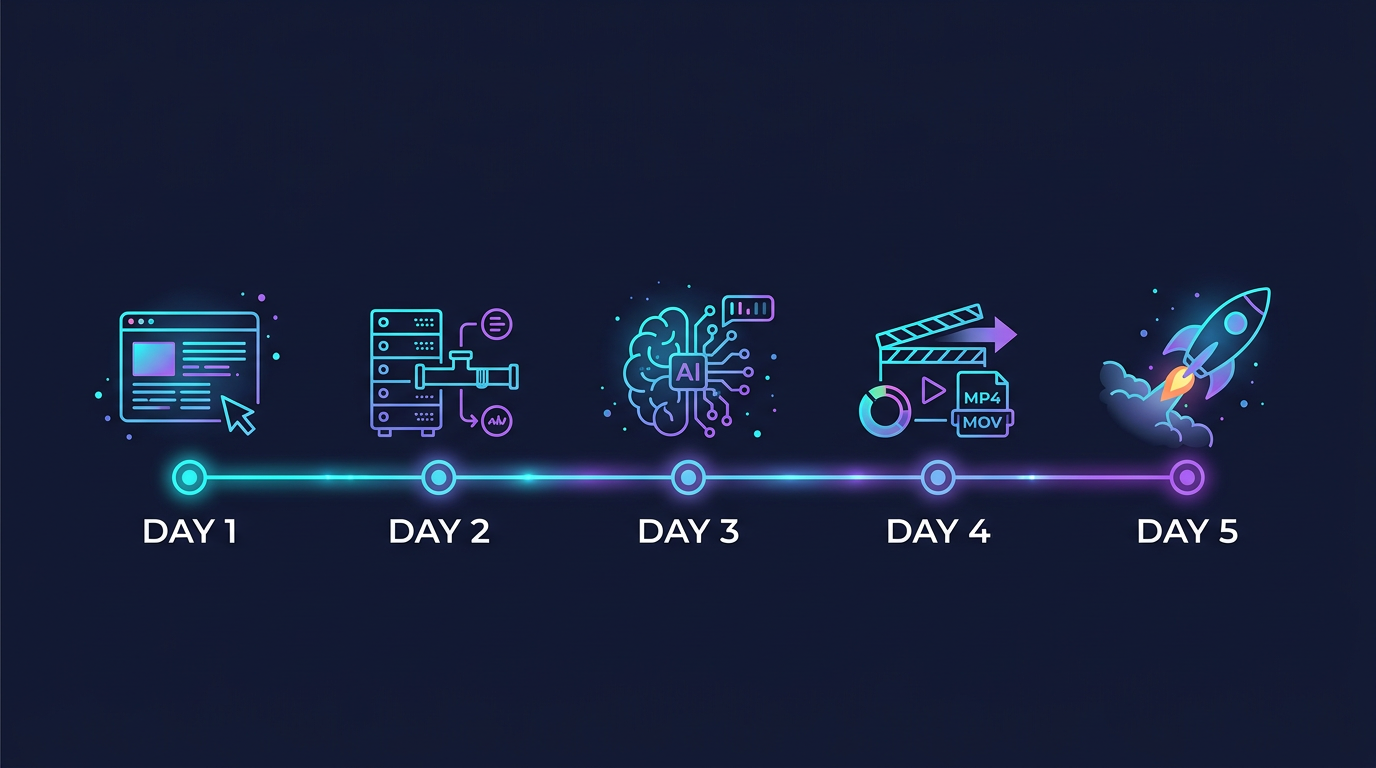
I built HypeClip in five days. Not five days of planning followed by five days of building. Five actual days, start to finish, from blank repo to live product accepting signups.
The secret? I didn't write most of the code myself.
Vibe coding is a term that gets thrown around a lot, and I think most people misunderstand it. It doesn't mean "let the AI do everything and hope for the best." It means you bring the product vision, the architecture decisions, and the taste.
The AI handles the implementation. You're the director, not the screenwriter.
Here's what that looked like in practice:
Day 1: Landing page and billing. I shipped a Next.js app with a clear value proposition, pricing tiers, and Stripe integration. No product yet, just a promise and a way to pay. I've learned the hard way that if you build the product before the billing, you'll find excuses to never charge.
Day 2: Core pipeline. The video upload flow, the AI processing pipeline on AWS, and the clip delivery system. This is where the AI tooling earned its keep. What would have been two weeks of backend work compressed into a focused afternoon of prompting, reviewing, and iterating.
Day 3: The scoring algorithm. HypeClip's key differentiator was its viral score. Every generated clip got a predictive score based on audio spikes, emotional peaks, scene transitions, and engagement patterns. This wasn't a gimmick; it was the feature that made creators trust the output. Building this took the most hands-on product thinking of the entire week.
Day 4: Export and platform formatting. Auto-cropping to 9:16 for TikTok and Shorts, caption generation, and batch export. The boring but essential plumbing that makes a tool actually usable in a real workflow.
Day 5: Polish, test, launch. I recorded a demo, wrote the launch copy, posted on X, and went live.
Five days. The total cost to get started was essentially my AWS bill, which I'll get to in a moment.
The lesson here isn't "AI makes you fast." It's that product sense matters more than code quality when you're building to validate. I wasn't writing elegant, maintainable code. I was shipping a product that solved a specific problem for a specific audience. That distinction is everything.
The $350/Month AWS Bill
In my last post about building startups, I preached about keeping economics impossibly lean. Vercel's free tier, Neon databases, costs near zero.
With HypeClip, I deliberately broke my own rule. The AWS bill was $350 a month. For a solo side project, that's absurd.
Here's why I did it anyway.
Video processing is compute-hungry. You can't transcode, analyse, and clip video on a Vercel edge function. The AI pipeline needed real GPU instances, fast storage, and enough headroom to process multiple videos concurrently without making users wait.
Speed was the product. HypeClip's promise was "under 5 minutes for a 30-minute video." Creators won't wait 20 minutes for clips. They'll close the tab, go back to manual editing, and never return. I needed fast infrastructure, not cheap infrastructure.
When you're building to flip, unit economics shift. If I were building HypeClip as a long-term business, I'd optimise that $350 down aggressively with reserved instances, pipeline tuning, maybe a cheaper provider entirely. But I wasn't building for the long term. I was building something that worked brilliantly right now so I could grow it fast and sell it while the momentum was hot.
The $350/month bought me a product that genuinely delivered on its promise. That mattered more than a prettier P&L.
100+ Creators in Two Months
Growing HypeClip wasn't complicated. I didn't run paid ads. I didn't hire a marketing agency. I did three things.
Built in public on X. I posted the build progress, the first clips, the revenue milestones. Every post attracted creators who were curious enough to try the tool. This is the same strategy I described in why I keep building startups: building in public isn't just accountability, it's your cheapest marketing channel.
Targeted creator communities directly. Reddit threads about clipping, Discord servers for streamers, Telegram groups for podcasters. I didn't spam. I replied to people who were already describing the exact problem HypeClip solved, and I showed them what it could do.
This is what I mean when I say do things that don't scale. It works every time.
Let the product sell itself. Creators are visual people. When you show someone a side-by-side of a raw two-hour stream and the 24 clips that HypeClip pulled from it in under 5 minutes, the reaction sells itself. I leaned heavily on video demos and real before/after examples rather than marketing copy.
Within two months, HypeClip had over 100 paying creators. The revenue was growing and the product was stable. I knew it was time to sell.
Why I Sold
This is the part that surprises people. "Why would you sell something that's growing?"
Because not every product needs to be your life's work.
I went into HypeClip with a clear thesis: build fast, validate fast, and if it works, sell it while the momentum is hot. I had no intention of becoming a full-time video tool company. I'm building Poggle, I have a demanding day job leading engineering organisations, and I know my own bandwidth.
Some products are flip candidates. HypeClip was one. It solved a clear problem, had a growing user base, and sat in a hot market (AI + creator economy). But scaling it further would require dedicated attention I couldn't give it: customer support, feature development, infrastructure optimisation, partnership deals with creator platforms.
The best time to sell is when things are going well. Not when you're burnt out, not when growth has stalled, and definitely not when you're desperate. I sold while the metrics were climbing and the product had clear momentum. That's what gets you a premium multiple.
I've seen too many indie hackers hold onto products until the love is gone and the growth has flatlined. By then, the best you can hope for is a fire sale. Selling while you're excited about the product means the buyer gets something alive, and you get a price that reflects it.
Selling on TrustMRR
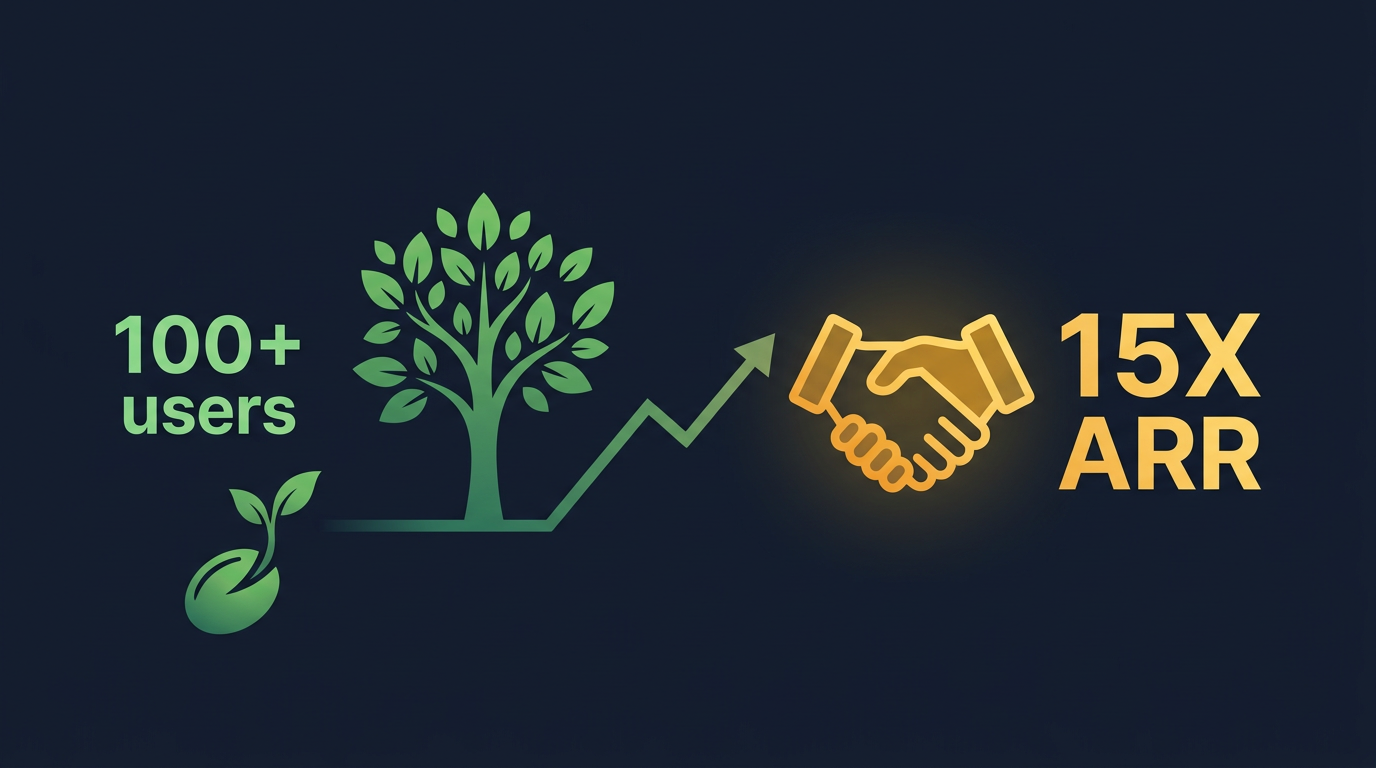
I listed HypeClip on TrustMRR, a marketplace for buying and selling startups with verified revenue. That last part matters. TrustMRR verifies revenue through Stripe and payment provider API keys, so buyers know the numbers are real, not inflated screenshots and "trust me bro" MRR claims.
Why 15X ARR? Aggressive, but justifiable. HypeClip had strong month-over-month growth, low churn, a hot market, and the product genuinely worked.
The growth trajectory suggested the ARR would keep climbing under an owner who could give it full attention. Buyers aren't just paying for what you have today; they're paying for the trajectory.
The negotiation took three weeks. Here's what the process looked like:
- Week one: Listed the product, fielded initial interest, filtered out the tyre-kickers. The serious buyers asked about churn rate, growth trajectory, infrastructure costs, and how much of my time the product required to maintain.
- Week two: Deep due diligence with two serious buyers. They wanted access to the Stripe dashboard, the AWS cost breakdown, and the usage analytics. Having verified revenue on TrustMRR saved enormous time here; the headline numbers were already confirmed by a third party.
- Week three: Final negotiation on price, transition terms, and handover scope. We agreed on 15X ARR. The buyer got the codebase, the domain, the user base, and a two-week transition period where I'd answer questions and help with the handover.
Advice if you're selling for the first time: Verify your revenue publicly before you list. It removes the single biggest friction point in any acquisition conversation.
Have your costs documented clearly; I had the AWS bill, Stripe fees, and a simple P&L ready before the first inquiry came in. And price ambitiously, because you can always negotiate down but you can never negotiate up from a lowball starting point.
The Playbook
Here's the condensed framework from idea to exit:
- Find a painful, specific problem in a community you can already reach.
- Build the smallest thing that solves it. Vibe code it. Five days, not five months.
- Charge from day one. No free tier. No "launching soon" page. Stripe on day one.
- Spend on what matters. If performance is the product, pay for performance. Cut everywhere else.
- Grow through building in public and direct community engagement. No ads needed at this scale.
- Sell while the trajectory is up. List on a verified marketplace. Price ambitiously.
- Move on. Start the next one.
Fair warning: this works best for products with a clear, contained scope. If you're building something that requires years of compounding network effects, this isn't the play. This is for tools, utilities, and single-feature micro SaaS products that solve one problem exceptionally well and can be handed off cleanly.
What's Next
HypeClip was my first exit of 2026. Built in 5 days for $350/month in infrastructure, sold for 15X ARR, and the whole arc from idea to closed deal took under three months.
The honest takeaway: most side projects don't need to be forever projects. If you're sitting on something that works, that has paying users, and that you don't have the bandwidth to scale, selling it isn't giving up. It's good business.
I'm now focused on Poggle, which is a long-term bet, not a flip. But the lessons from HypeClip (build fast, validate fast, charge immediately, know when to let go) are baked into everything I build now.
If you've got a side project collecting dust, stop sitting on it. Either grow it or sell it. The worst outcome isn't failure; it's a product that works, that has real users, and that slowly dies because you couldn't decide whether to commit or let go.
Ship it, sell it, start the next one.

Nick Morgan
Technology Director by day, indie hacker by night. I write about building products, validating ideas, and shipping fast. Subscribe for indie hacking tips and tricks, delivered monthly.